





























WHO Confirms Marburg Virus Case in Ugandan Toddler Amid Enhanced Ebola Surveillance
The World Health Organisation says a toddler in Uganda has tested positive for the Marburg virus. Health authorities have stepped up surveillance for Ebola and Marburg as they monitor contacts and try to contain further spread of the deadly viral disease.


For a family in western Uganda, the health alerts of clinical health mask a deep tragedy and a stressful wake-up call for global health workers. Behind the medical acronyms is a story of a very close call, a system working as it was designed to, and the heartbreaking vulnerability of a child.
Kyegegwa: A heavy blow
The patient at the heart of this scare was a 17-month-old toddler in the western Kyegegwa District in Uganda. The little boy fell desperately ill with a racking fever and aches in his muscles. He was rushed to hospital but tragically died despite medical support.
In many parts of the world a child dying of a sudden illness could be misdiagnosed or quietly buried. The child’s death set off immediate alarms because of where this happened. Ugandan health teams have been on high alert for a dangerous outbreak of Ebola crossing the border from the neighbouring Democratic Republic of the Congo and have been conducting active defensive surveillance.
The active Ebola threat means that health workers are treating every unexplained haemorrhagic fever case with extreme urgency. They took a sample from the toddler and sent it to a lab, anticipating it would test positive for Ebola. Instead, the tests came back with a whole other nightmare: the Marburg virus.
Sister Viruses, Same Horror
For medical teams on the ground, a Marburg diagnosis is as scary as Ebola. The two pathogens are biological cousins, part of the same family of filoviruses.
Microscopically they look identical; they attack the human body in exactly the same aggressive manner, and their initial symptoms – high fever, terrible headaches and profound exhaustion – are completely indistinguishable without complicated laboratory tests. Both viruses are merciless and can have a fatality rate that skyrockets if untreated. Like Ebola, Marburg has no approved vaccine or treatment at this time. Containment is all about old-school public health measures: finding the sick, tracing every single human being they came into contact with, and isolating them before the virus can jump again.
The race to halt the spread
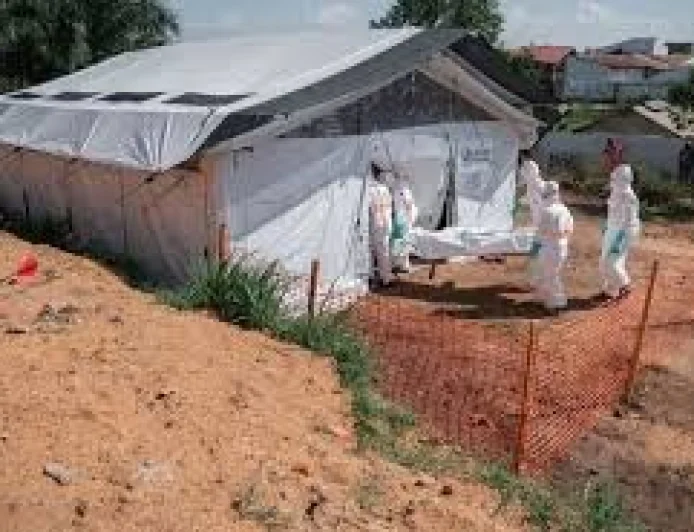
The moment the positive test was confirmed, a huge, silent dragnet began in western Uganda. Health workers clad in full protective gear hurried to the toddler’s village to piece together his last days.
Since Marburg is spread through direct contact with bodily fluids, anyone who held the boy, comforted him, or prepared his body for burial was at extreme risk. Emergency response teams have tracked down the people who had contact with the child.
Fortunately, there is good news. Every contact that has been traced is being monitored closely, and none have developed symptoms. Health agencies are treating this as an isolated spillover event, not a chain of human-to-human infections, likely due to contact of the child with fruit bats or an environment where bats are present.
A System That Passed the Test
The loss of a toddler is a deep tragedy, but health experts are breathing a quiet sigh of relief because it could have been exponentially worse.
That an isolated case of a rare virus in a remote district was identified, tested and contained in days shows that Uganda’s frontline surveillance system is remarkably sharp. Health workers hunting for Ebola accidentally tripped over Marburg. In doing so, they probably prevented a huge, silent epidemic from ever getting started.
What's Your Reaction?
 Like
0
Like
0
 Dislike
0
Dislike
0
 Love
0
Love
0
 Funny
0
Funny
0
 Angry
0
Angry
0
 Sad
0
Sad
0
 Wow
0
Wow
0