
























Air India Phuket Incident: Why Did Airline Remove ‘Turbulence’ From Statement?
Air India initially blamed brief turbulence after a plane reportedly dropped 300 feet near Phuket, but a second statement five hours later removed the turbulence reference. Here's what the documents reveal.

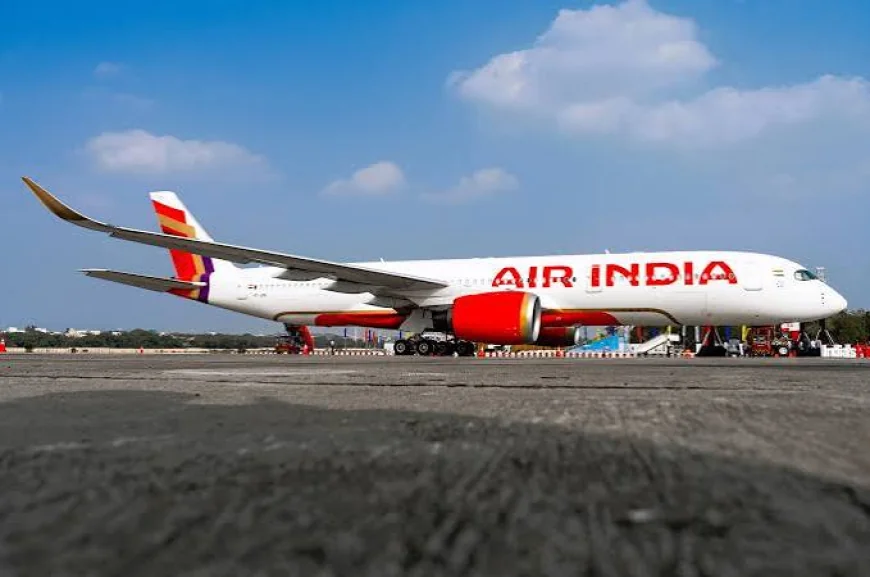
The controversy surrounding Air India Flight 2379 (Phuket to Delhi) stems from a stark shift between the airline's initial public narrative and subsequent official documents released by regulatory and government bodies.
1. Air India’s Initial Statements: Blaming "Turbulence"
-
The First Claim: On August 4, immediately following the incident where the Airbus A320 abruptly dropped roughly 300 feet and left around 24 passengers and crew injured, Air India released a statement framing it as a "brief in-flight turbulence-related event" that resulted in a "momentary change in altitude."
-
The Shift: In subsequent statements issued just hours and days later, the airline and official communications began omitting or softening the emphasis on weather-related turbulence as emerging details pointed to deeper mechanical complications.
2. What Official Documents and Reports Actually Indicate
Subsequent investigations by the Ministry of Civil Aviation and the Aircraft Accident Investigation Bureau (AAIB)—backed by data logs and leaked maintenance reports—unveiled a much more complex picture that went far beyond standard air turbulence:
-
Cascade of Technical Failures: Reports reviewing automated post-flight maintenance data revealed that the sudden plunge was preceded by a rare sequence of technical malfunctions. These included multiple hydraulic system low-pressure indications, an unexpected autopilot disconnect, and simultaneous fault indications affecting the aircraft's elevators (the flight control surfaces that govern nose movement).
-
The Pilot's Manoeuvre: Aviation safety experts noted that when the aircraft encountered severe flight-control system anomalies, the crew—realising critical system issues—had to take manual evasive action, pushing the nose down to regain control, which inadvertently induced a negative-G environment that tossed passengers around the cabin.
-
Reclassification as a "Serious Incident": Recognizing the gravity of the technical and structural anomalies, the Ministry of Civil Aviation officially stripped away the simple "turbulence" label, classified the event as a "serious incident," and handed over the probe entirely to the AAIB, alongside technical assistance from Airbus and French safety investigators (BEA).
-
Scrutiny on the Crew: Official documents also highlighted that standard post-flight protocols subjected the flight crew to psychoactive substance screenings, where the Pilot-in-Command's initial sample required rigorous confirmatory testing, further shifting public and regulatory focus away from weather alone and onto operational and human factors.
What's Your Reaction?
 Like
0
Like
0
 Dislike
0
Dislike
0
 Love
0
Love
0
 Funny
0
Funny
0
 Angry
0
Angry
0
 Sad
0
Sad
0
 Wow
0
Wow
0