























Indus Waters Treaty: India Rejects Hague Court Ruling, Says 'No Jurisdiction' Over Pakistan Dispute
India has rejected a Hague-based court's ruling on the Indus Waters Treaty, saying the court has no jurisdiction. The dispute follows India's decision to put the treaty in abeyance after the Pahalgam terror attack.

India Rejects Hague Court Ruling on Indus Waters Treaty: 'No Jurisdiction' Over Dispute With Pakistan
New Delhi: India has rejected a ruling by a Hague-based international court concerning the Indus Waters Treaty, maintaining that the court has no jurisdiction to adjudicate the matter. New Delhi's position comes amid heightened tensions between India and Pakistan following the April 22, 2025 Pahalgam terror attack, in which 26 people were killed.
Following the attack, India announced a series of measures against Pakistan, including putting the Indus Waters Treaty (IWT) in abeyance.
India Questions Court's Jurisdiction
India has consistently maintained that the arbitration mechanism invoked in the Indus Waters dispute does not have jurisdiction to decide the matter. New Delhi has argued that Pakistan's parallel proceedings before different mechanisms under the treaty are not valid.
The latest development has once again brought the long-running water-sharing agreement between the two countries into focus.
What Is the Indus Waters Treaty?
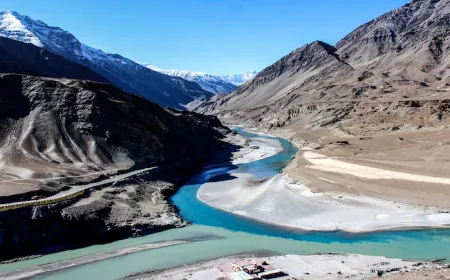
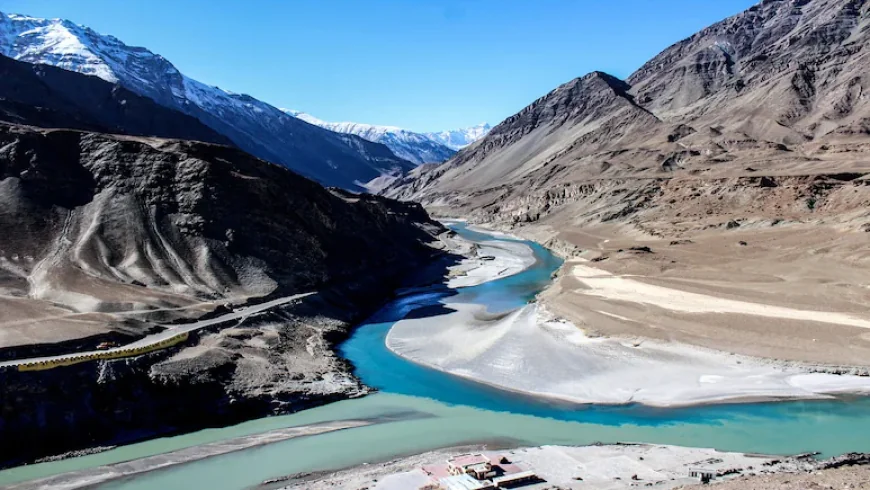
The Indus Waters Treaty was signed in 1960 between India and Pakistan with the World Bank's involvement. The agreement governs the use of the waters of six major rivers of the Indus river system.
Under the treaty, the eastern rivers—Ravi, Beas and Sutlej—were largely allocated to India, while the western rivers—Indus, Jhelum and Chenab—were primarily allocated to Pakistan, subject to certain rights and conditions for India.
Treaty Put in Abeyance After Pahalgam Attack
After the Pahalgam terror attack in April 2025, India announced that the treaty would remain in abeyance until Pakistan credibly and irrevocably ends its support for cross-border terrorism.
Pakistan has opposed India's decision and has continued to raise the issue through international mechanisms.
Why the Ruling Matters
The dispute is significant because the Indus river system is vital to both countries, particularly for agriculture, drinking water and hydropower.
India's rejection of the Hague ruling indicates that New Delhi does not accept the authority of the particular arbitration process to decide the dispute. The disagreement is therefore not merely about water-sharing but also about the interpretation and operation of the treaty's dispute-resolution framework.
The development comes amid continued tensions in India-Pakistan relations and could further complicate efforts to resolve the future of the Indus Waters Treaty.
What's Your Reaction?
 Like
0
Like
0
 Dislike
0
Dislike
0
 Love
0
Love
0
 Funny
0
Funny
0
 Angry
0
Angry
0
 Sad
0
Sad
0
 Wow
0
Wow
0