
























Delhi Murder Horror: Victim Stabbed 51 Times, Body Found In Drain
Residents of northeast Delhi are in shock after a gruesome murder where the body of a victim was allegedly stabbed 51 times and dumped in a drain. The police are investigating it.

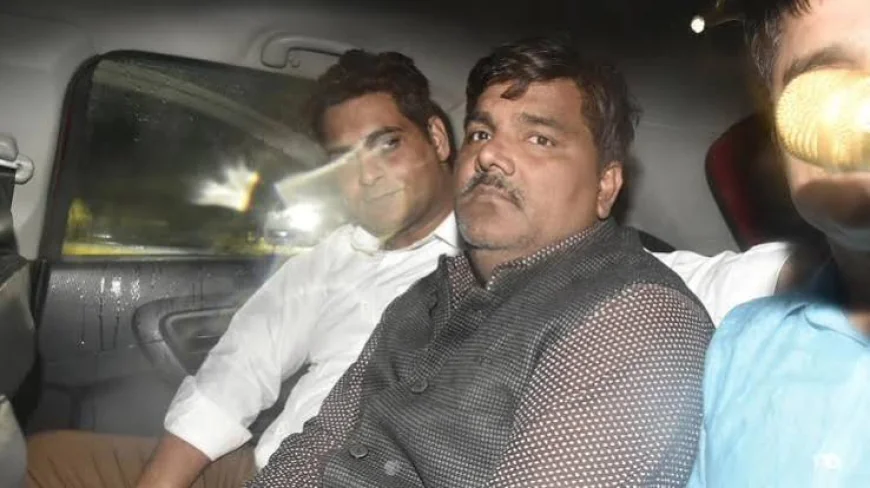
A local court on Wednesday convicted former Aam Aadmi Party (AAP) Councillor Tahir Hussain and four others in a landmark judgement, ending a dark chapter of the 2020 Northeast Delhi riots, for the dastardly murder of 26-year-old Intelligence Bureau (IB) staffer Ankit Sharma.
The case became a defining symbol of the sheer ferocity of the violence that tore through the national capital. Additional Sessions Judge Praveen Singh held Hussain guilty of actively instigating a violent mob.
A deadly attempt to quiet the crowd
The evening of February 25, 2020 brought tragedy to the communally tense Chand Bagh area. Ankit Sharma, a young intelligence officer who lived near the neighbourhood, had just returned from work. He went out to find a heated confrontation in the making, and to help calm the crowd and urge them to keep the peace.
A furious mob turned on him instead of listening. The prosecution said Sharma was snatched by the mob, taken away in a violent manner and was subjected to a frenzied and brutal attack.
The sheer brutality of the attack stunned even seasoned forensic investigators. Later, post-mortem report confirmed that Sharma had 51 injuries inflicted by sharp-edged weapons and severe blunt force trauma. The attackers took his body and disposed it in the nearby open drain of Khajuri Khas to erase the evidence of the crime.
The Investigation and the Final Judgement
Sharma’s search ended the next day when his family with the help of local residents recovered his body from the dark waters of the drain. A key breakthrough came when investigators pieced together eyewitness accounts and local mobile footage of the mob’s route through the area.
The case took a turn towards Tahir Hussain when Sharma’s father Ravinder Kumar filed a police complaint against him. Police charge sheets said Hussain’s building had been used as a tactical launchpad, stuffed with piles of stones, bricks and petrol bombs used by rioters.
The court convicted Hussain of murder, kidnapping with intent to confine and rioting with deadly weapons and promoting communal enmity. While he was cleared of a pre-planned criminal conspiracy, the court found that he directly abetted the mob at the scene. Hussain, co-accused Anas, Javed, Nazim and Kasim were found guilty by the court of the crime, bringing a sense of long-awaited legal closure to a tragedy that left an indelible scar on the city.
What's Your Reaction?
 Like
0
Like
0
 Dislike
0
Dislike
0
 Love
0
Love
0
 Funny
0
Funny
0
 Angry
0
Angry
0
 Sad
0
Sad
0
 Wow
0
Wow
0