

















Congress Targets Centre Over Inflation Spike, Asks PM Modi to Address People’s Concerns
Congress has been attacking the Modi government over rising inflation after retail inflation climbed to a 17-month high of 4.38% in June, asking when the Prime Minister will address the plight of the common man.

Behind the dry, standard economic bullet points showing "retail inflation at a 17-month high of 4.38%" and the political back-and-forth between party leaders, there is a quiet, stressful math problem playing out at every kitchen table across the country. It is the human story of an ordinary family standing in front of a vegetable stall or a grocery counter, looking at the bill, and realising their monthly budget simply doesn’t stretch as far as it did a few weeks ago.
Here is what this political flashpoint looks like at a raw, human level:
The Shrinking Grocery Bag
When inflation numbers tick up, they don't hit everyone equally. While macroeconomists debate the numbers, the reality is felt most acutely in the kitchen.
The biggest driver behind this sudden spike is food inflation, which jumped to 5.32%. Everyday essentials, the staples that form the baseline of every home's nutrition, are getting costlier. For an ordinary family, it means making quiet compromises. It’s deciding to buy a little less, skipping certain vegetables, or choosing cheaper substitutes just to ensure the household expenses don't completely spin out of control.
The weight is even heavier outside the major cities. While urban areas saw a slightly lower rate, rural inflation climbed to 4.74%. In villages, where incomes are often less predictable, that extra percentage point acts like a direct, invisible tax on families who have the least room to manoeuvre.
The Middle-Class Domino Effect
The anxiety of inflation doesn't stop at the market stall; it ripples into the future. When retail inflation jumps past the central bank’s baseline target, it sets off a domino effect through the financial system.
For a middle-class family trying to build a life, the biggest fear isn't just the price of food; it’s the threat of rising interest rates. If banks respond to these numbers by tightening the screws, it translates directly into higher EMIs on home loans and car loans. Suddenly, a young couple trying to buy their first home faces the reality of their hard-earned monthly savings being eaten away by interest, leaving even less breathing room for day-to-day living.
The Political Reality
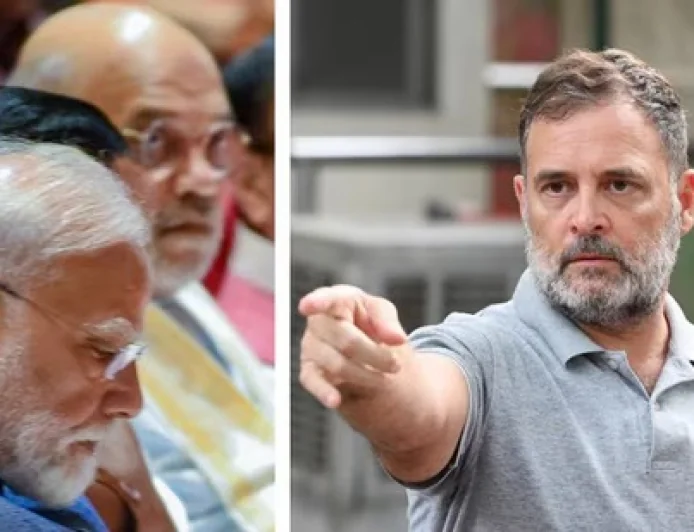
This raw, economic pressure is exactly what fuels the sharp political rhetoric. When opposition leaders challenge the Prime Minister, asking when he will "speak about the people's pain", they are tapping into a very real sense of exhaustion.
For the person running a household, the political arguments about corporate investments or policy long games feel incredibly distant. What matters at the human level is the immediate reality: the cost of living is rising faster than wages, the burden of adjusting to global shocks always seems to fall on the common citizen, and families are left to quietly figure out how to do more with less.
The Reality Check: Inflation isn't just a percentage point on a government chart; it is a measure of daily friction. When basic necessities cost more, it forces millions of ordinary people to spend their mental energy calculating survival rather than planning for growth.
What's Your Reaction?
 Like
0
Like
0
 Dislike
0
Dislike
0
 Love
0
Love
0
 Funny
0
Funny
0
 Angry
0
Angry
0
 Sad
0
Sad
0
 Wow
0
Wow
0