

























China Plans Mach 26 Asteroid-Impact Test to Advance Planetary Defence
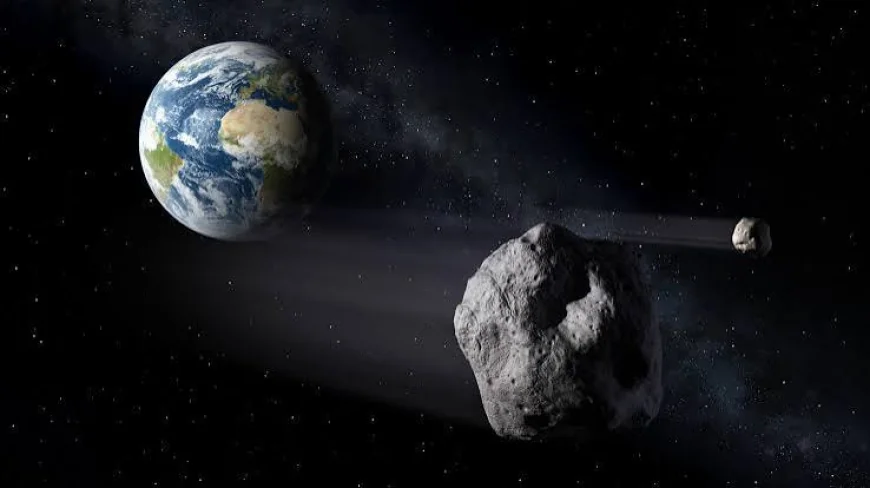
China is planning a planetary-defence mission that could strike a near-Earth asteroid at more than 9 km/s—about Mach 26—to test whether a high-speed impact can alter its path.

Taking the Lead on Asteroid Defence
China is about to take things to a whole new level, preparing to launch a high-stakes kinetic impact test that’s a bold leap forward for international planetary defence. Led by scientists at the China National Space Administration (CNSA), the upcoming mission will launch a specialised spacecraft to crash into a near-Earth asteroid at an astonishing speed of over 9 kilometres per second, or roughly Mach 26 at sea level.
Beyond Previous Milestones
NASA’s pioneering 2022 Double Asteroid Redirection Test (DART) successfully demonstrated that by smashing a spacecraft into an asteroid you could shift its orbit at roughly 6.1 kilometres per second, but China’s new test is aiming for far more. The target is a trickier and smaller 30-metre near-Earth asteroid, such as 2015 XF261. It’s much harder to keep tabs on smaller space rocks, which also tend to behave erratically. That’s why the mission is designed to see if we can not only change an asteroid’s course but also deal with its structure in a worst-case scenario.
The double-spacecraft mission will send an observer satellite ahead months in advance to map the asteroid’s surface and record the high-speed collision in real time, with an impact speed nearly 50 per cent faster than DART. This is a giant step forward as humanity learns how to protect our planet from cosmic surprises.
The Science Behind Cosmic Collisions
Preparing for an impact of this size requires unprecedented precision in orbital mechanics, deep space communication and guidance systems. At hypervelocity a tiny miscalculation could mean a complete miss, so the last few moments of the ship’s descent would be reliant on an onboard auto-targeting system. The data from the experiment are expected to give valuable information about how different space rocks absorb kinetic energy and what the internal composition and cohesion of rubble-pile asteroids look like.
As space agencies across the globe accelerate their asteroid-monitoring programmes, missions like this are transforming science fiction into science fact. Researchers are setting the stage for a robust safety net for future generations, testing our capacity to intercept and deflect dangerous objects well before they become a real threat to Earth, ensuring we’re ready for whatever the cosmos throws at us.
What's Your Reaction?
 Like
0
Like
0
 Dislike
0
Dislike
0
 Love
0
Love
0
 Funny
0
Funny
0
 Angry
0
Angry
0
 Sad
0
Sad
0
 Wow
0
Wow
0