




























700-Year-Old Banyan Tree in Bihar Becomes India's Oldest Scientifically Dated Banyan
Scientists have confirmed that a banyan tree in Bihar's Munger district is around 700 years old using radiocarbon dating. The breakthrough marks the first scientifically accurate dating of a banyan tree in India and could transform research on ancient tropical trees.

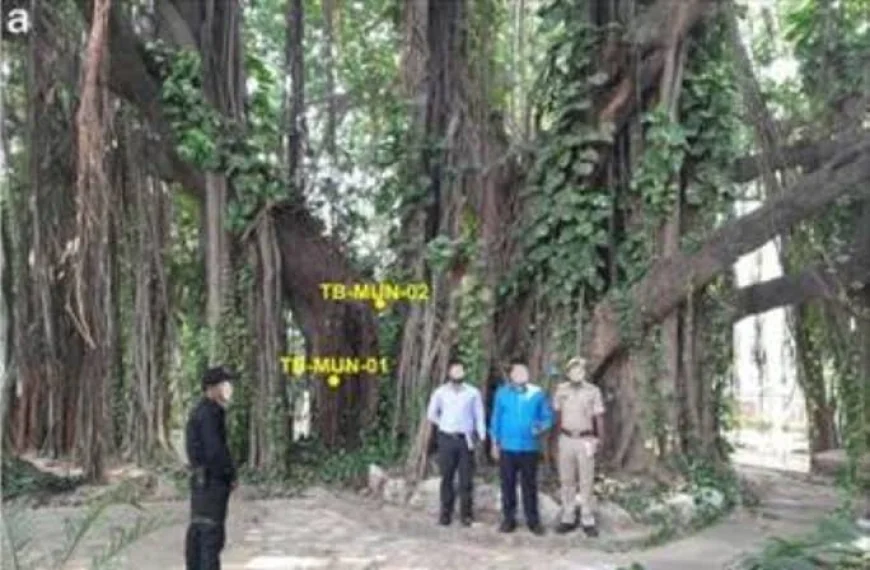
Bihar’s 700-year-old banyan tree makes scientific history
In Munger, Bihar, stands an impressive specimen of the oldest accurately dated banyan tree in India. Scientists say advanced radiocarbon dating has estimated the tree to be about 700 years old.
This breakthrough changes the game. For years the age of India’s biggest trees has been a matter of local myth and guesswork. Now science gives us a practical way to find out the true story of these living monuments.
Why It Was Nearly Impossible to Date a Banyan Tree
Counting the age of a tree usually seems simple: you look at the rings inside the trunk. In cold climates trees develop special annual rings that are like a birth certificate. But tropical trees such as the banyan don’t grow these neat, visible rings, leaving scientists in the dark for decades.
Adding to the complexity, banyans extend aerial roots from their branches that grow into the ground to become new trunks. This makes a big tangled mess of wood, and it is very hard to tell where the old tree ends and the new growth begins.
A team of researchers of the Birbal Sahni Institute of Palaeosciences, Lucknow, has developed a brand new testing method to solve this puzzle. Scientists were able for the first time to pin down its age with scientific accuracy by carefully taking samples of the tree’s core and using the latest carbon dating techniques.
Not Just a Tree: A Living Ecosystem
The banyan tree has been worshipped in Indian culture for centuries as a symbol of resilience and a natural community centre.
But they also have huge environmental value. The wide branches and dense foliage of one old banyan tree resemble a busy miniature city. The region’s largest natural area, it is a keystone of the regional ecosystem, offering critical shelter, nesting grounds and food for hundreds of species of birds, insects and local wildlife.
What This Means for the Future
This finding is a huge leap, and it goes far beyond one tree in Bihar.
The new dating method developed for this project provides scientists with a blueprint to study other ancient tropical trees around the world. Accurately tracking the age of these heritage trees will enable researchers to better understand forest growth, the changes to ecosystems over centuries, and how we can protect India’s rich botanical history for generations to come.
What's Your Reaction?
 Like
0
Like
0
 Dislike
0
Dislike
0
 Love
0
Love
0
 Funny
0
Funny
0
 Angry
0
Angry
0
 Sad
0
Sad
0
 Wow
0
Wow
0