













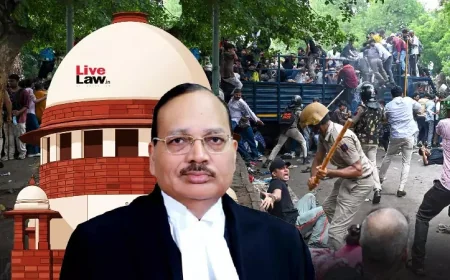













Swear Words and Vulgar Expletives Alone Do Not Amount to Obscenity: Supreme Court
The Supreme Court ruled that merely using swear words or vulgar expletives does not constitute an obscenity offence under Section 294 of the IPC.

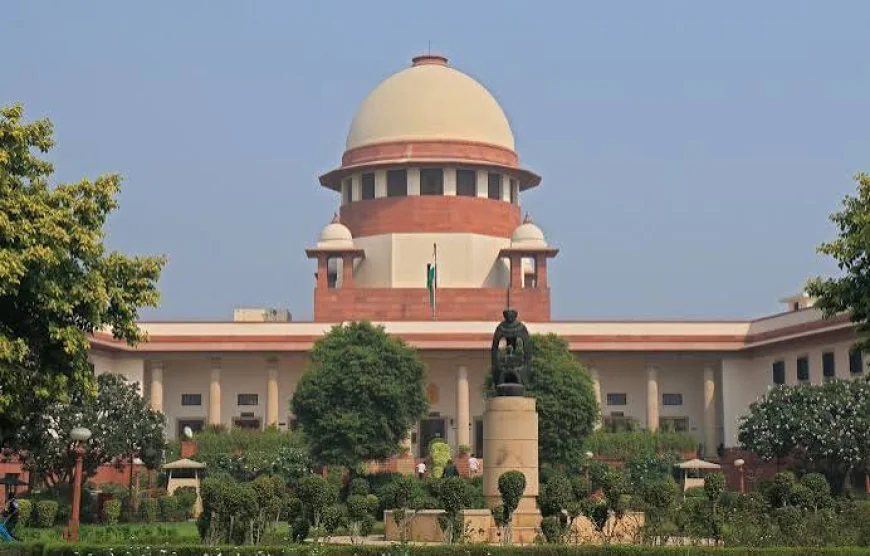
The Supreme Court’s decision on July 19, 2026, brings common-sense clarity to an area of the law that has often seemed confusing and overly broad. The Court has correctly distinguished between bad manners and criminality by holding that the use of swear words or vulgar expletives does not per se amount to “obscenity” under Section 294 of the Indian Penal Code.
A Distinction Between "Rude" and "Obscene"
Chances are we’ve all been in a situation where someone in public is using harsh or offensive language. It’s jarring, it’s unpleasant, and it’s definitely not polite. But the Court is also reminding us that “offensive” and “obscene” are two very different things in the eyes of the law.
For an act to be legally "obscene", it must be more than offensive to our ears. It must be lewd, lascivious, or sexually suggestive in a way that actually corrupts public morals. A person who uses foul language in the heat of an argument, while frustrating to observe, does not meet that high threshold, as the Court has stated.
Why It Matters in Daily Life
For many it is a welcome ruling. It keeps the law from being a tool to police bad manners or petty grievances. Absent such a distinction, police could theoretically be summoned to every neighbourhood spat or traffic dispute in which emotions rise and words are exchanged.
In essence, by drawing this line, the Supreme Court is saying the law should be for behaviour that is really damaging or dangerous, not for using the heavy hand of the state to punish people for just being crude. It’s an admission that, while we all value a civil society, we can’t – and shouldn’t – legislate basic etiquette.
From a Human Perspective
In some ways, this is a very human decision. It acknowledges that when people are really angry or frustrated, they often lose their temper and say things they don’t mean. Those moments are never perfect, but they are part of the messy reality of human interaction. Basically, the court ruled that a bad temper or a sharp tongue is not necessarily a criminal offence.
It is a reminder that the law is best when it protects us from real harm, not when it tries to sanitise every interaction we have in public. It allows us a bit more breathing room in our daily lives, knowing that while we might want to do better with language,
What's Your Reaction?
 Like
0
Like
0
 Dislike
0
Dislike
0
 Love
0
Love
0
 Funny
0
Funny
0
 Angry
0
Angry
0
 Sad
0
Sad
0
 Wow
0
Wow
0