






























Scientists Discover How Practice Rewires the Brain to Enable True Multitasking
Practice, practice, practice can rewire the brain so learned tasks can avoid the prefrontal cortex and enhance multitasking, report researchers at Georgetown University Medical Centre.#Neuroscience #BrainResearch #Multitasking #Science #GeorgetownUniversity #HumanBrain #CognitiveScience #Learning #Memory #Research#Neuroscience #BrainResearch #Multitasking #Science #GeorgetownUniversity #HumanBrain #CognitiveScience #Learning #Memory #Research

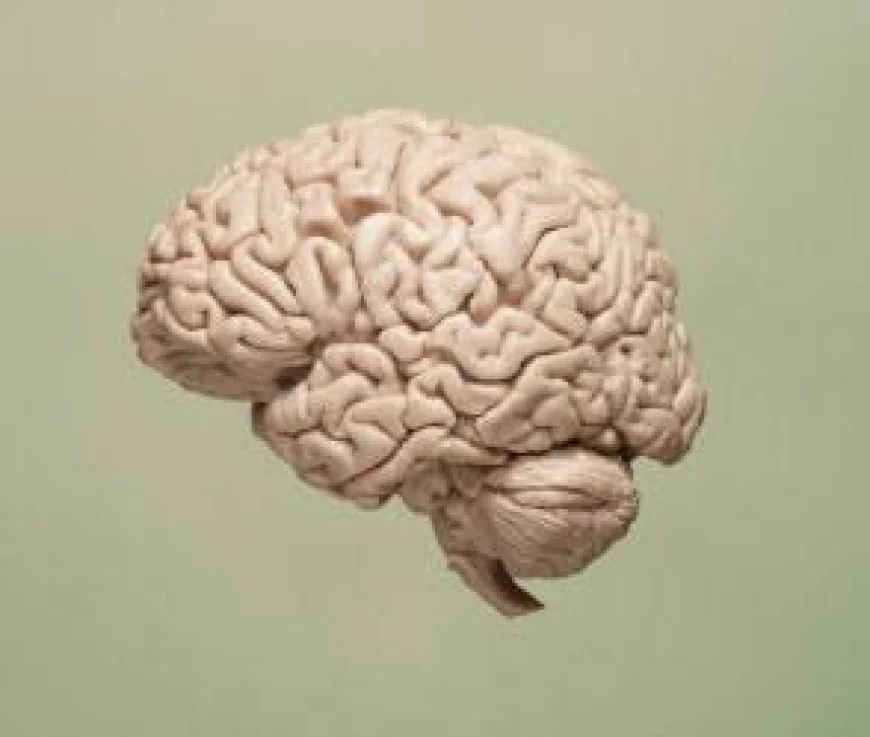
If you look past the clinical terms like "prefrontal cortex", "neural task circuitry", and "fMRI scans", this is a fascinating story about how your brain is not actually a rigid, fixed computer. Instead, it acts more like a piece of soft clay that you can physically remould with your own hands.
For decades, scientists told us that "true multitasking" was a flat-out myth. They insisted that when we think we are doing two things at once, our brains are actually just rapidly, exhaustingly switching back and forth between them like a hyperactive light switch.
But this new discovery shows that with enough dedication, we can actually change our own physical brain architecture. Here is what that looks like at a raw, human level:
The Rent-Free Landlord of the Brain
Think of your prefrontal cortex, the area right behind your forehead, as a brilliant, highly stressed manager. This is the "thinking" part of your brain, responsible for making decisions, solving problems, and learning new things.
But it has one major flaw: it is a bottleneck. It can really only focus on one demanding task at a time.
When you first try to learn something complex like driving a car, playing an instrument, or sorting difficult data, this manager has to dedicate 100% of its attention to it. You are clumsy, tense, and easily distracted because your brain's "thinking centre" is completely full.
Building a Private Fast-Lane
What the Georgetown researchers discovered is that if you practise a task obsessively (in this study, participants did a visual sorting task over 30,000 times), something incredible happens.
Your brain basically says, "This is taking up too much of the manager's time. Let's build a dedicated office for this."
Slowly, the brain physically rewires itself, carving out a brand-new, specialised circuit in the temporal cortex, an area further back that excels at recognising patterns and handling memory.
Once this new circuit is fully built, the task completely bypasses your thinking centre. It runs on its own private fast-lane, completely on autopilot.
The Freedom to Do Two Things at Once
Because that task has been successfully "offloaded" from your prefrontal cortex, the manager's desk is suddenly wide open again.
This is where true multitasking becomes possible. Because the practised skill is running in its own background circuit, your prefrontal cortex is completely free to focus on a second, entirely different task.
It explains why an experienced driver can hold a deep, meaningful conversation while safely navigating traffic, whereas a teenager in their first week of driving school would find talking to a passenger completely overwhelming.
The encouraging human takeaway is that your mental capacity isn't set in stone. Through sheer persistence and practice, you have the power to literally reshape your brain's physical wiring, making room for more of the things you want to do.
What's Your Reaction?
 Like
0
Like
0
 Dislike
0
Dislike
0
 Love
0
Love
0
 Funny
0
Funny
0
 Angry
0
Angry
0
 Sad
0
Sad
0
 Wow
0
Wow
0