



























India Must Lead Efforts to Secure Bab el-Mandeb Strait Amid Red Sea Shipping Risks
India can play a leading role in protecting maritime security around the Bab el-Mandeb Strait, where rising tensions threaten global trade, energy supplies and Red Sea shippin

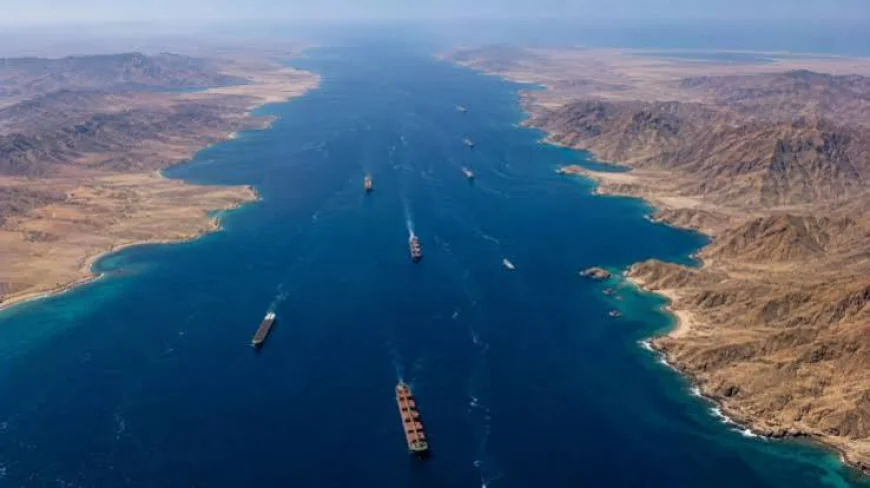
India must take the lead in securing the Bab el-Mandeb Strait
Simultaneous flashpoints along critical global shipping lanes have an immediate impact on local markets, factory floors and household budgets. The world's commerce is facing an unprecedented dual-chokepoint crisis as geopolitical tensions rise, putting at risk both the Strait of Hormuz and the vital Bab el-Mandeb Strait. Traditional security frameworks are buckling under the strain, and strategic analysts are increasingly stressing that New Delhi is uniquely placed to step up and prevent a catastrophic shipping collapse in the Red Sea.
The Red Sea's Lifeline
The narrow Bab el-Mandeb passage is the crucial southern gateway to the Suez Canal, connecting the Indian Ocean to the world’s busiest container traffic and energy supplies. This corridor was an important alternative route when traffic in the Persian Gulf was blocked by conflict.
But with instability now spreading to the Red Sea, India’s economic and energy security is on the line. A huge share of India’s external trade and exports of petroleum products to Europe passes through this very artery, and any extended blockage could push freight insurance rates through the roof, delay vital imports and endanger thousands of merchant seafarers.
A Proactive Framework for New Delhi
With its increasing naval capabilities, demonstrated diplomatic deftness and proven anti-piracy record, India has the credibility to help anchor stability in the region. Experts say a multi-pronged approach is needed to keep these critical waters open:
Multilateral Naval Coordination: Form targeted maritime partnerships with like-minded countries, such as France and Japan, which operate proximate strategic logistics hubs in Djibouti, to synchronise defensive patrols and escort at-risk merchant vessels.
Operationalising Maritime Domain Awareness: Applying intelligence structures such as the Information Fusion Centre–Indian Ocean Region (IFC-IOR) to provide real-time situational awareness of commercial vessel movements in dangerous waters.
Regional Diplomacy: Engage positively with Red Sea littoral states and the international community to promote rules-based freedom of navigation in accordance with international maritime law.
Maritime security and economic survival are increasingly intertwined; there is no more standing on the sidelines.
What's Your Reaction?
 Like
0
Like
0
 Dislike
0
Dislike
0
 Love
0
Love
0
 Funny
0
Funny
0
 Angry
0
Angry
0
 Sad
0
Sad
0
 Wow
0
Wow
0