





























US Approves Earendil-1 Satellite to Beam Sunlight onto Earth at Night
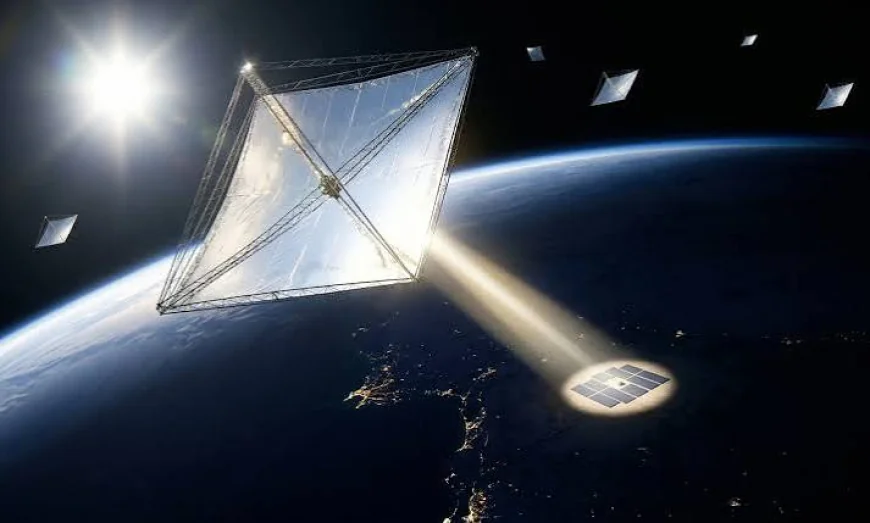
U.S. regulators have approved Reflect Orbital’s Earendil-1 satellite, which will shine a nearly 60-foot space mirror on targeted areas up to three miles wide after sunset.

The global space industry is on absolute high alert as a radical technology shift—stretching right through the heart of orbital commerce—barrels into low-Earth orbit. It is tracking to be the most heavily criticised and controversial disruption to the natural night sky since the dawn of the satellite era. While tech visionaries finalised their funding rounds in high-end Silicon Valley offices, the federal clearance of a bold new orbital asset hit the scientific community instantly, leaving global astronomers and environmental advocates scrambling as a giant space mirror secures its green light.
Moonlight on Demand
The project's initial systemic damage hits the hard-fought global sanctuaries of dark-sky astronomy closest. A sudden, official regulatory authorisation clears the way for California-based startup Reflect Orbital to deploy its experimental Earendil-1 demonstration satellite later this year.
The Federal Communications Commission (FCC) confirmed it has granted the necessary licenses for orbital operations, bypassing a massive wave of fierce public pushback. While the agency explicitly noted its authority is strictly limited to radio frequency allocation rather than environmental policing, space lawyers warn the decision effectively opens the frontier to artificial nighttime illumination without a comprehensive safety audit. Emergency engineering teams are assembling the hardware on a war footing, though an unprecedented flood of over 1,800 formal objections from scientific coalitions has made the public relations runway incredibly treacherous.
The Core Ambition
Even though current commercial energy grids rely entirely on terrestrial storage batteries, the incoming aerospace front is packing massive corporate backing with highly disruptive operational capabilities.
The Solar Beam: The lower orbital shell is facing what climate engineers call its most radical physics test in decades. Once positioned at an altitude of roughly 400 miles, the dormitory-refrigerator-sized spacecraft will unfurl a specialised 60-foot square mylar mirror. By precision-tracking the sun while passing over the dark side of the globe, the steerable structure is engineered to redirect a localised, three-mile-wide beam of concentrated light directly to paying customers on the ground.
The Commercial Use: The target applications are screaming directly into high-value industrial sectors. While initial test flights will restrict beam intensity to the brightness of a full moon, the company's broader roadmap aims to extend the generation windows of solar power farms well past dusk, illuminate late-night infrastructure builds, and blast instant light onto remote search-and-rescue operations during major disasters.
Blinding the Night
The sudden realisation of this regulatory milestone has exposed terrifying vulnerabilities in international space law. The American Astronomical Society and leading chronobiologists warn that the cumulative fallout of the project poses severe threats of temporary "flash blinding" to commercial pilots and highway motorists if the mirror tracking slips by even a fraction of a degree. Furthermore, ecological watchdogs argue that erasing natural night cycles will completely scramble the critical migration routes of nocturnal birds and disrupt human sleep health.
Yet, because the FCC ruled these planetary hazards lie outside its bureaucratic purview, the lone test satellite sets a massive legal precedent. With the company openly projecting a sprawling future constellation of up to 50,000 mirrors by 2035, the global scientific community is warning that ground-based deep space observation could soon be rendered completely impossible.
The Corporate Blueprint
The unchecked acceleration of private space initiatives has effectively turned low orbit into an unmonitored laboratory for corporate engineering. While company founders argue that the mirrors will remain strictly dark when not explicitly activated by approved clients, the sheer scale of the long-term vision has sparked an intense, borderless debate over who truly owns the night sky.
The Immediate Reality: Across major aerospace operations and regulatory offices, routine administrative workflows have been picked completely clean and replaced by immediate launch-window planning, compliance checks, and intense legal reviews. Fleet management engineers are desperately racing to optimise the payload's automated origami-folding mechanics ahead of schedule, while international observatory networks are restructuring their telescope scheduling protocols in a frantic bid to ride out the incoming wave of commercial space illumination.
What's Your Reaction?
 Like
0
Like
0
 Dislike
0
Dislike
0
 Love
0
Love
0
 Funny
0
Funny
0
 Angry
0
Angry
0
 Sad
0
Sad
0
 Wow
0
Wow
0