





























TCL Launches OLED Panel Inkjet Printing Technology to Reduce Manufacturing Costs
TCL has developed a new OLED panel production process using inkjet printing which it claims will lower costs and increase the efficiency of future display manufacturing.

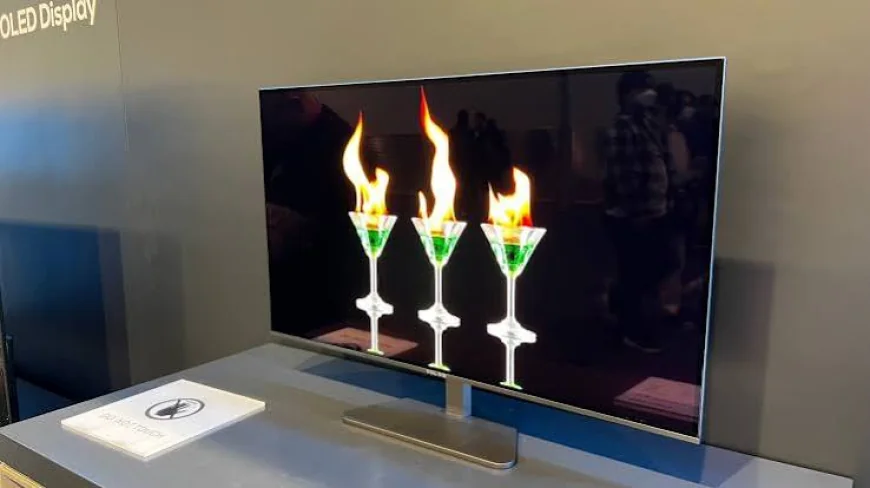
TCL has officially started the journey toward changing how we make OLED screens. As of July 2026, the company’s display arm, TCL CSOT, has begun the mass production of its first consumer-grade inkjet-printed (IJP) OLED monitor panels.
Why this is a big deal
For years, making OLED panels has been a slow, expensive, and wasteful process that relied on "vacuum thermal evaporation", where materials are vaporised and then deposited onto a screen through fine metal masks. As you try to make bigger screens, these masks often warp, which drives up costs and limits production efficiency.
TCL’s approach, as the name suggests, works more like a giant, high-precision inkjet printer. It sprays the organic light-emitting materials directly onto the glass. This has a few huge benefits:
-
Lower Costs: It reduces manufacturing costs by about 20% compared to traditional methods, which could eventually make high-end OLED monitors and laptops much more affordable for all of us.
-
Less Waste: The process is much cleaner and faster—about 30% faster to produce—making it a more sustainable way to build electronics.
-
Better Performance: Because the "ink" is printed in a precise RGB stripe layout, it can improve colour accuracy and text clarity, which is a common pain point with some other OLED technologies.
Where you’ll see it first
Right now, this is still in the early stages. TCL has kicked things off by producing a 27-inch 4K monitor panel with a 120Hz refresh rate. While it’s currently a "low-volume" production run at their facility in Wuhan, it’s a critical proof-of-concept.
Don’t expect to walk into a store and buy an "inkjet-printed TCL monitor" tomorrow, though. It will take some time for these panels to be shipped to monitor manufacturers, integrated into their products, and finally stocked on shelves. However, this move is a clear shot across the bow of industry giants like LG and Samsung, as it introduces a new competitive force that could force overall market prices to come down in the long run.
It’s an exciting step toward a future where top-tier display technology isn't just a luxury for early adopters but something that’s more accessible for everyone’s home office. Does this change how you feel about waiting for a new monitor upgrade, or are you sceptical about how these early "printed" panels will perform compared to the mature OLEDs already on the market?
What's Your Reaction?
 Like
0
Like
0
 Dislike
0
Dislike
0
 Love
0
Love
0
 Funny
0
Funny
0
 Angry
0
Angry
0
 Sad
0
Sad
0
 Wow
0
Wow
0