




















Sonam Wangchuk to Remain at Safdarjung Hospital as Delhi High Court Denies Interim Relief
The Delhi High Court has denied interim relief to Sonam Wangchuk’s wife and refused her request to shift him from Safdarjung Hospital.

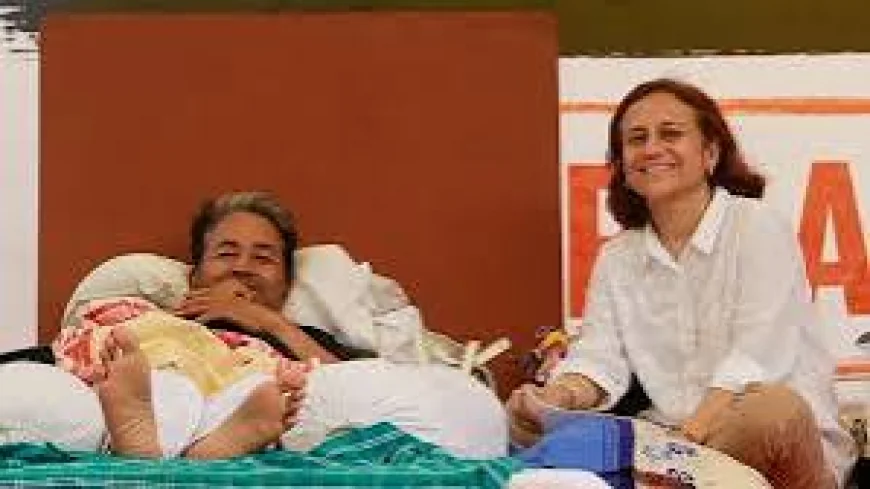
The situation surrounding activist Sonam Wangchuk is a deeply personal and emotionally charged struggle that pits an individual's right to personal autonomy against the state's responsibility to preserve a life. After 21 days of fasting, Mr Wangchuk was moved by police to Safdarjung Hospital, and the subsequent legal battle over his care has left his family and supporters feeling profoundly unheard.
The Human Toll of Mistrust
For Gitanjali Angmo, Sonam Wangchuk’s wife, the last 48 hours have been a blur of anxiety and frustration. Her plea to the Delhi High Court wasn't just about hospital logistics; it was a desperate attempt to regain control over her husband’s well-being.
The family’s loss of faith in the government-run facility stems from a deep sense of disconnect. They have raised serious concerns about conflicting reports regarding his health, specifically mentioning discrepancies between the hospital’s internal readings of his potassium levels and those from an independent laboratory. When a family feels they are being kept in the dark about their loved one's condition, the hospital ceases to be a place of healing and starts to feel like a place of confinement. Ms Angmo has spoken openly about the "heavy police presence" and the feeling of being watched, which she says has turned their private family struggle into something that feels more like an "illegal detention".
The Court’s "Larger Picture"
In Sunday’s special hearing, the Delhi High Court found itself in a difficult position. Justice Mini Pushkarna emphasised that "every life is precious", framing the government's intervention as a medical necessity rather than an arbitrary act. The court noted that Mr Wangchuk is not formally under detention and that his family has been granted access, including a separate room to be with him.
However, for those supporting the protest, this legal rationale doesn't soothe the underlying tension. To the family, the right to choose one's doctor and place of care is a fundamental expression of dignity for any free citizen. As Ms Angmo poignantly asked, "Does a citizen not have the right to access care of his choice? And if the government intervenes, can't they do so democratically with the family's trust?"
A Movement That Continues
Despite the physical toll of his three-week hunger strike and his current stay in the hospital, Mr Wangchuk’s message remains steadfast. He has urged his supporters to press on with the planned march to Parliament on July 20, characterising the movement as a "second freedom movement".
As the case is set to be heard again on July 24, the situation remains a delicate one. It’s a moment that asks us to think about where the line should be drawn: when does "protecting" someone cross over into overriding their own agency? For the family waiting by his bedside, and for the thousands who have been following his fast, the next few days will be as much about the battle for human dignity as they are about the medical facts.
Do you think there's a middle ground where the state's duty to protect health and the individual's right to their own medical choices can coexist?
What's Your Reaction?
 Like
0
Like
0
 Dislike
0
Dislike
0
 Love
0
Love
0
 Funny
0
Funny
0
 Angry
0
Angry
0
 Sad
0
Sad
0
 Wow
0
Wow
0