





























Bee Brain Study Explains How Colonies Divide Work Without Central Planning
A new study shows that neural circuits in honeybee brains help determine age-based jobs inside a colony, offering insight into how bees organise work without a central authority.

The secret of the hive: How little bee brains achieve self-organization
A Marvel Without a Boss
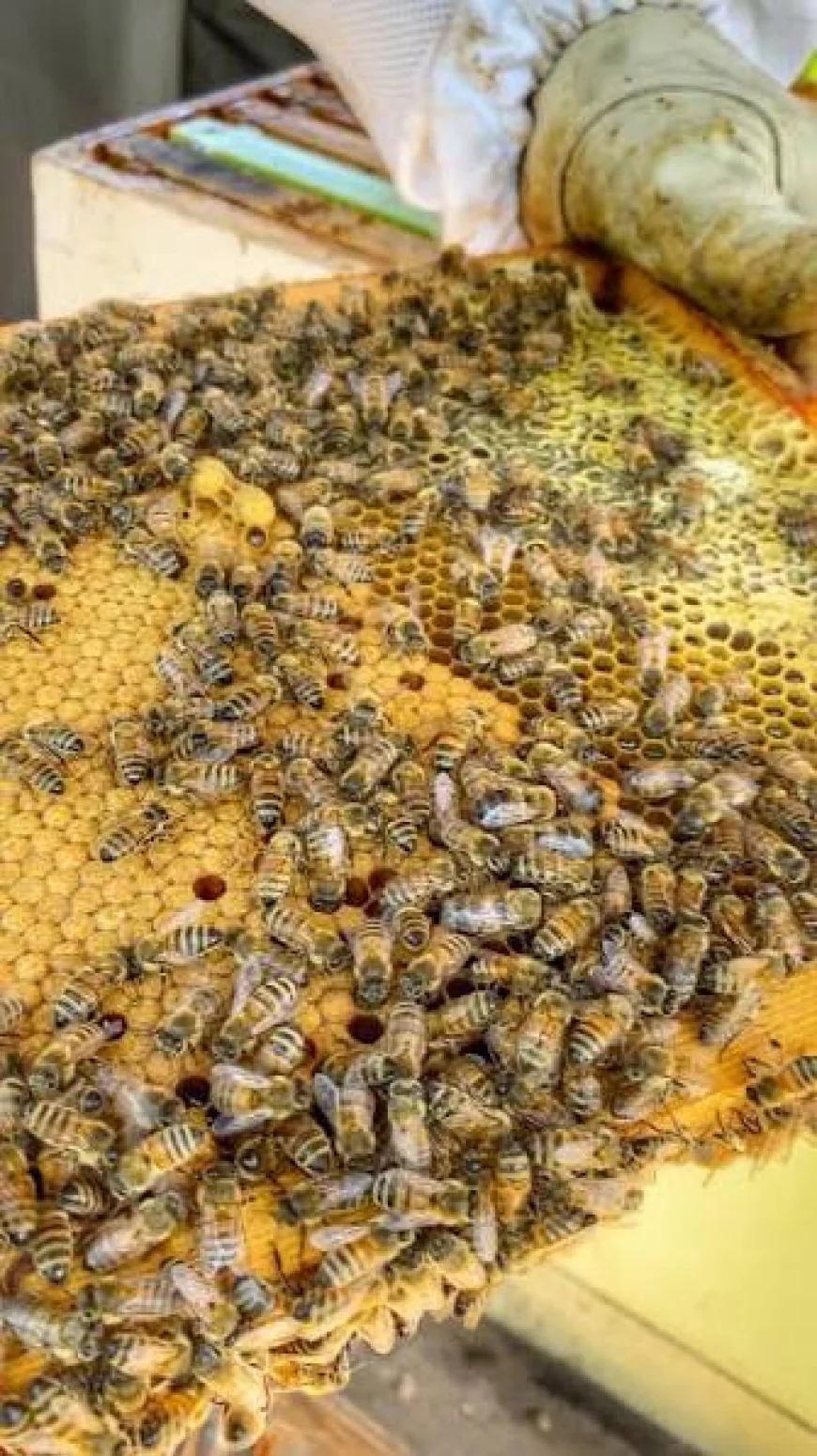
Thousands of honeybees buzzing around a hive looks like a bustling, chaotic metropolis. But while a bee colony may consist of tens of thousands of individuals, its operation is staggering in efficiency. No boss, no manager, no central planning committee doling out daily assignments. Instead, the superorganism operates by distributing decision-making, and the complex divisions of labour, from tending larvae to gathering nectar, arise spontaneously from simple interactions.
Inside the Tiny Brains That Control the Hive
Recent scientific discoveries about neurobiology in bees have demonstrated that individual workers use brains smaller than a sesame seed to do these complex social tasks. Instead, bees are constantly adapting to what their colony requires. They do not have a fixed predetermined career path based on their age.
Researchers have discovered that shared communal food webs and social signals are very important in controlling who does what. If a hive suddenly runs out of foragers, the young nurse bees can change gears quickly and go out to collect pollen. On the other hand, older foragers can revert to nursing when the nursery is overburdened. This fluid and distributed approach allows the colony to immediately redistribute its labour force to adapt to environmental stress, showing that high-level coordination doesn’t require a mastermind—just brilliant teamwork at the microscopic scale.
Lessons from Collective Intelligence
What’s really remarkable about this phenomenon is how easily these tiny insects process environmental feedback. Individual bees make localised decisions that are beneficial for the whole collective by reading chemical cues, sampling shared nectar and assessing the density of workers in different parts of the comb. Scientists who study these patterns are always amazed at how robust and adaptable the system is. Whether enduring a tough winter, exploring new nesting sites or warding off predators, honeybees provide a masterclass in cooperation. Looking at the inside of a hive, in the end, could be a great metaphor for human engineering, sparking new ideas for building decentralised networks, robotics and complex organisational structures that avoid top-down control.
What's Your Reaction?
 Like
0
Like
0
 Dislike
0
Dislike
0
 Love
0
Love
0
 Funny
0
Funny
0
 Angry
0
Angry
0
 Sad
0
Sad
0
 Wow
0
Wow
0