

Arti Bali
New Delhi, Dec 5 . India and Russia are poised to take their partnership beyond the traditional domains of defence and energy, exploring broader economic collaboration. Officials said that steps are underway to negotiate a Free Trade Agreement (FTA) with the Eurasian Economic union (EAEU)that will create new opportunities for Indian businesses across multiple sectors.
Moscow is actively working to integrate India into the Eurasian Economic union (EAEU), while both countries are planning industry-specific events and sustained trade and investment initiatives, underscoring a shared commitment to deepen bilateral economic ties amid shifting global dynamics.
Alexander Stuglev, Director of the Roscongress Foundation, indicated that while one annual joint event may not suffice, both countries are open to expanding engagement through industry-specific events in India, signaling a more sustained focus on facilitating trade, investment, and business cooperation under the evolving FTA framework.
“One joint event a year may not be enough,” and Moscow is mulling to potentially expand the kind of events that it has in India to include some industry-specific events.
“Well, the potential negotiation for the India-Russia FTA deal, we can only announce the numbers once the visit is over. It’s too early to speak so far.” As for the current dynamics of the trade turnover between our two countries, it was repeatedly mentioned during the forum that it really demonstrates a very serious and impressive process. Already today, we hear that the trade turnover between our two countries has achieved $65–70 billion. And the goal, the shared goal we have, is to make it more than $100 billion. This is definitely in the interests of both our countries, because we know that those are not just numbers—they are new jobs, more taxes, and generally better social well-being in one of our countries,” he said.
Speaking to the media during a press conference, Alexander Stuglev, highlighted that the current India-Russia trade turnover stands at $65–70 billion, with a shared target of surpassing $100 billion. “These are not just numbers—they translate to new jobs, higher taxes, and better social well-being for both countries.”
Addressing concerns over trade imbalances, he stressed that Indian exporters already enjoy success in Russia, from large enterprises to small and medium-sized companies, facilitated by digital B2B platforms and marketplaces. Key sectors identified for growth include medical technologies, healthcare, IT and AI solutions, semiconductors, automotive components, transportation, logistics, tourism, and agriculture, alongside labour migration opportunities under intergovernmental agreements.
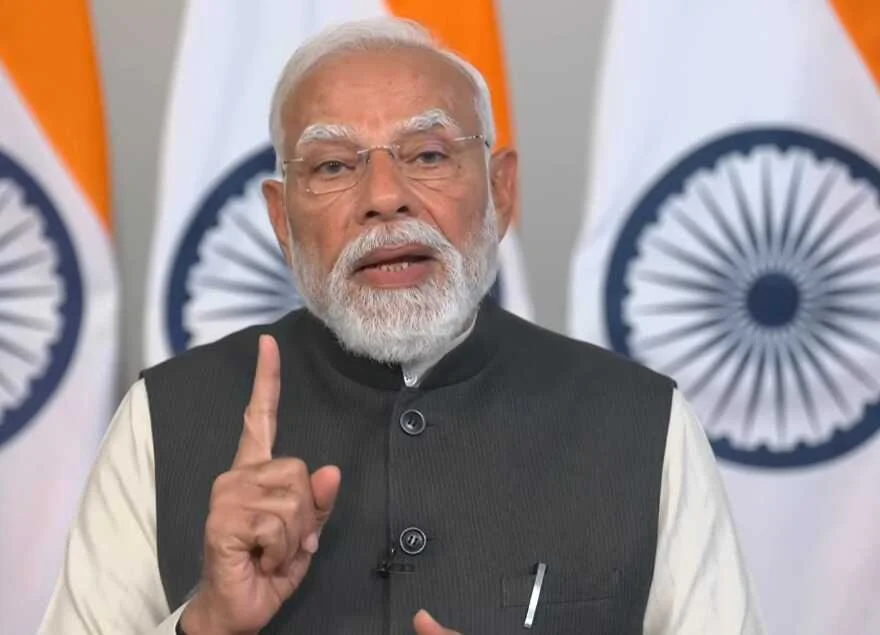
In addition, officials indicated that Indian Prime Minister Narendra Modi and Russian President Vladimir Putin are likely to announce a declaration for the development of a Strategic Economic Roadmap 2030 as the leaders hold summit talks today. The roadmap is expected to guide economic cooperation, advance the FTA with the EAEU, and focus on areas such as labour mobility and Arctic shipbuilding, alongside expanding trade, investment, and connectivity projects.
He also emphasized that sanctions imposed by Western countries are temporary and often intended to create competitive advantages for Western economies. “These conditions have opened huge niches for Indian, Turkish, Chinese, and other manufacturers,” the official said, highlighting India’s potential to benefit from the reshaping of global trade flows.
On infrastructure for business collaboration, platforms like St. Petersburg International Economic Forum, Eastern Economic Forum, Territory of Innovations, Healthy Society, and Urban Hub were cited as key tools for fostering Indian-Russian business engagement, ranging from high-tech innovation to urban development and healthcare.
When asked about trade in national currencies amid restrictions on the US dollar, Alexander Stuglev, “We kindly remind that our themes are connected with the Russian Congress and its people, with all our respect.” Well, the matters that you’ve raised are always on the agenda in one way or another, and they are indeed very exciting issues.If we were just sitting here drinking tea at my kitchen, we wouldn’t be using our national currency.”
Stressing that India and Russia are actively exploring independent payment mechanisms to reduce third-party influence and promote financial sovereignty, he said, “This way, we are reducing the influence of third countries on our decisions.” After all, it is a way to protect yourself from the impact of third countries and their ability to influence the policy or development of your country.” In general, we are talking about the creation of an independent instrument between the countries.”
“As far as I remember, it was discussed in the framework of BRICS, which was recently held in Kazan. “We can talk of any analogs of systems like SWIFT or the establishment of other exchanges as opposed to the traditionally existing exchanges.And this is one of the many tools promoting independence of the countries.” And this is the matter that was addressed at the latest Heads of State BRICS Summit that took place in Kazan, Russia.”
. .