Jayanta Roy Chowdhury
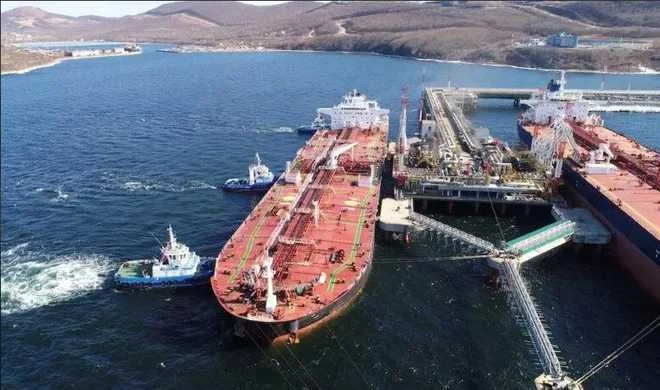
New Delhi, Jan 8 . As the United States threatened fresh sanctions on countries purchasing Russian oil, Indian companies have slowed or halted crude imports from Russia altogether, senior officials in the Petroleum Ministry said on Thursday.
While New Delhi officially maintains that it reserves the right to procure crude oil from any source, it has quietly begun winding down purchases from Russia, even as imports from the United States have increased.
However, other officials noted that India is expanding its defence and nuclear cooperation with Moscow encouraging Russia to enter into joint ventures, even as oil trade between the two countries is being scaled back.
“We may reduce our oil dependence on Moscow, but not completely stop buying crude from her. However, we do want to encourage the Russians to buy more Indian produce and invest more in joint ventures with the large stock of Indian rupees they have,” said Pinak R Chakravarty, former Secretary (Economic Relations) with the Ministry of External Affairs.
State-run oil refiners have been quietly advised to wind down deliveries of Russian crude and limit their purchases from non-sanctioned firms, while Reliance Industries Ltd, the world’s largest single site refinery has stated that it has not been receiving any Russian crude for the last three weeks nor expecting any this month.
India has also taken a policy decision to limit oil imports from any single country to no more than 25 per cent of its total crude purchases, a move designed to limit exposure to geopolitical shocks and advance its long-term objective of energy self-sufficiency.
Officials in New Delhi’s petroleum ministry describe the measure as an institutional safeguard, a “shock absorber” for an increasingly volatile global energy market.
“Diversification is not an optional policy to show that we are even-handed. It is a strategic necessity given the geopolitical risks facing the energy market,” a senior petroleum ministry official said.
All these decisions come as US officials indicated that President Donald Trump has approved a bipartisan proposal to expand sanctions on Russia, which could potentially also target countries such as China, India, and Brazil that continue to purchase Russian oil.
Senator Lindsey Graham in a social media post on X, said Trump gave his approval during a recent meeting, clearing the way for the legislation, titled the Sanctioning of Russia Act of 2025, to advance toward a bipartisan vote in Congress, possibly as early as next week.
One of the largest buyer of Russian crude, Reliance Industries Ltd in a post on social media platform X earlier this week, said that it’s neither received nor is expecting any Russian crude oil deliveries in the December-January period.
“Reliance Industries’ Jamnagar refinery has not received any cargo of Russian oil at its refinery in the past three weeks approx. and is not expecting any Russian crude oil deliveries in January,” RIL said in a statement posted on X.
Indian refiners had increased their imports of Russian crude from 2022 onwards, on the back of huge discounts offered by Moscow after being hit by western sanctions, with 35 per cent of India’s crude purchases in 2025 coming from Russian ports alone.
The Rosneft-backed Nayara refinery is possibly the only refinery in India which continues to depend heavily on Russian crude.
India’s crude oil imports from the US surged in late 2025, reaching their highest levels in years of around 5.4 lakh to 5.75 lakh barrels per day in October. The United States became India’s fourth-largest supplier by November 2025. “And this trend is growing,” said officials.
However, officials point out that the 25 per cent cap on energy imports from any one source policy will also ensure that the US does not fill in the vacuum created by lower imports from Russia, thus ensuring a new energy dependency.
Indian trade officials also noted that India’s cooperation with Russia is increasing, especially after the summit meeting with President Vladimir Putin in New Delhi last month. “The Putin visit definitely spurred our growing phalanx of joint ventures in defence and nuclear power,” said Chakravarty.
India’s defence and nuclear cooperation with Russia has gained momentum, with bilateral trade reaching a record of nearly USD 70 billion.
India has imported over USD80 billion worth of Russian arms over the past two decades, though Russia’s share in India’s arms imports has declined from 76 per cent in 2009–13 to about 36 per cent in 2019–23 as India diversified suppliers.
“Recent initiatives include joint ventures for MiG-29 spares, air defence systems, deliveries of the S-400 missile system, and licensed production of AK-203 assault rifles in India and this is going to increase, not go down,” officials said.
An expanding nuclear energy collaboration remains another cornerstone of bilateral ties with Russia, partnering India with the Kudankulam Nuclear Power Plant, where units 1 and 2 are operational and units 3 to 6 are under construction, with completion targeted by 2027.
“Rare earth, green energy and connectivity projects through central Asia and the Arctic are other areas where we will enlarge our collaboration with the Russians,” officials said.
. JRC KK